
Good SEO software helps agencies do more than track rankings. It should reduce manual work, keep strategy organized across multiple sites, and make execution easier across content, technical SEO, and reporting. If your team is juggling too many disconnected tools, the right platform can improve both delivery speed and margin.
This guide explains what matters most when evaluating SEO software for agencies, where different tool types fit, and how to choose a setup that supports growth without adding unnecessary complexity.
What agencies actually need from SEO software
Agency SEO is different from running campaigns for a single brand. You are managing multiple websites, competing priorities, client expectations, and recurring deliverables at the same time. That makes software selection less about having the longest feature list and more about supporting repeatable workflows.
The best SEO software for agencies usually helps with five core jobs:
- Strategy: keyword discovery, clustering, competitive analysis, prioritization, and roadmap planning
- Content operations: briefing, content creation support, optimization, and publishing workflows
- Technical SEO: audits, issue detection, prioritization, and implementation support
- Performance tracking: visibility, rankings, traffic signals, and impact monitoring
- Scalability: handling more pages, more markets, and more work without adding the same amount of manual effort
If a platform is strong in only one area, it may still be valuable, but agencies often end up stitching together several tools to cover the full process. That can work, but it also creates more handoffs, duplicate work, and reporting friction.
How to evaluate SEO software for agencies
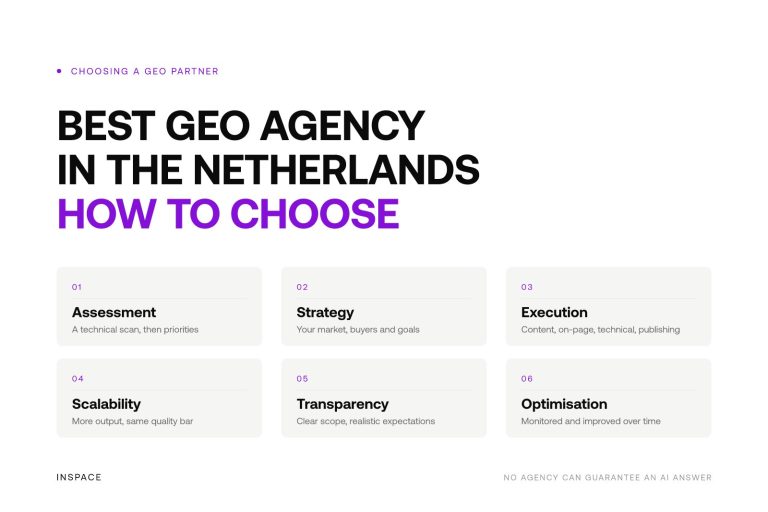
When comparing an SEO platform for agencies, focus on workflow fit before feature depth. A tool can be excellent in isolation and still be a poor choice for your agency model.
1. Can it reduce manual SEO work?
The strongest agency software removes repetitive tasks from planning and execution. Look for meaningful automation around strategy setup, clustering, content production support, technical checks, and publishing steps. Saving a few minutes in reporting matters, but reducing recurring production work usually has a bigger operational impact.
2. Does it support the way your team delivers SEO?
Some agencies are content-led. Others lean heavily on technical audits, local landing pages, or conversion-focused service pages. Your software should match your delivery model. If most of your output is content and optimization work, a platform built around strategy, content workflows, and implementation will usually create more value than a pure reporting tool.
3. Will it scale across more clients, pages, and markets?
Scalability is not just about project limits. It includes whether the system can support more websites, more content output, more location pages, and broader search visibility efforts without your team rebuilding the process each month.
4. Does it connect strategy to execution?
Many agencies already have tools for audits, keyword research, and dashboards. The real bottleneck is often turning insights into published improvements. Software becomes more useful when it helps move from holistic SEO analysis to action, rather than stopping at recommendations.
5. Is the output easy to review and control?
Automation matters, but so does oversight. Agencies need clear visibility into what the platform is doing, what content or optimizations are being created, and how priorities are set. Fast execution is valuable only when quality stays under control.
Common types of SEO software agencies use
Most agency stacks fall into one of three categories.
Specialist tools
These solve one problem well, such as crawling, backlink analysis, rank tracking, or reporting. They are useful when your team already has mature processes and wants best-in-class depth in a specific area.
Tool stacks
This is the most common setup: one tool for research, one for technical audits, one for reporting, and one for content. It offers flexibility, but it also increases cost, process fragmentation, and training time.
All-in-one or automation-first platforms
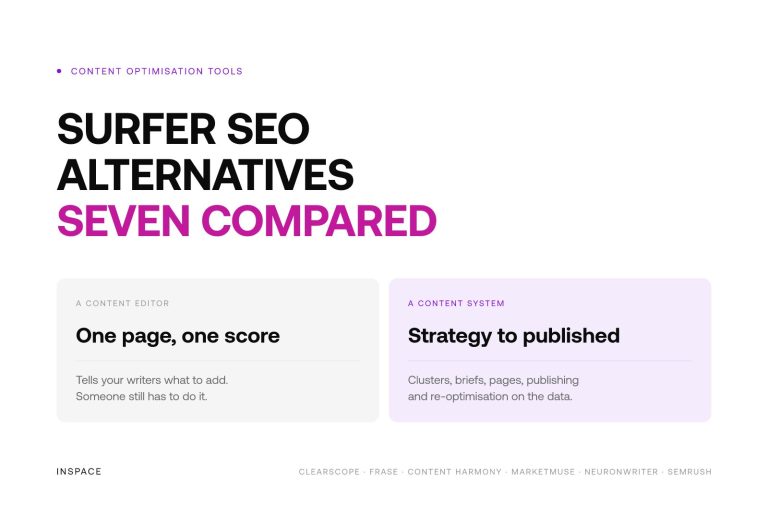
These aim to centralize more of the SEO process inside one system. For agencies, this model is especially attractive when the goal is to scale content, technical optimization, and planning with less manual coordination. The tradeoff is that you need to judge the platform on real workflow coverage, not just broad positioning.
Where all-in-one agency SEO software creates the most value
All-in-one SEO software is most useful when your agency wants to simplify delivery and reduce tool sprawl. Instead of moving between separate research, content, technical, and publishing environments, the team works in a more connected system.
This can be especially effective when the platform supports activities such as:
- Automated strategy support for topic selection and prioritization
- Content creation and clustering at scale
- Technical optimization workflows linked to identified issues
- Publishing across major CMS environments
- Ongoing performance improvement rather than one-time recommendations
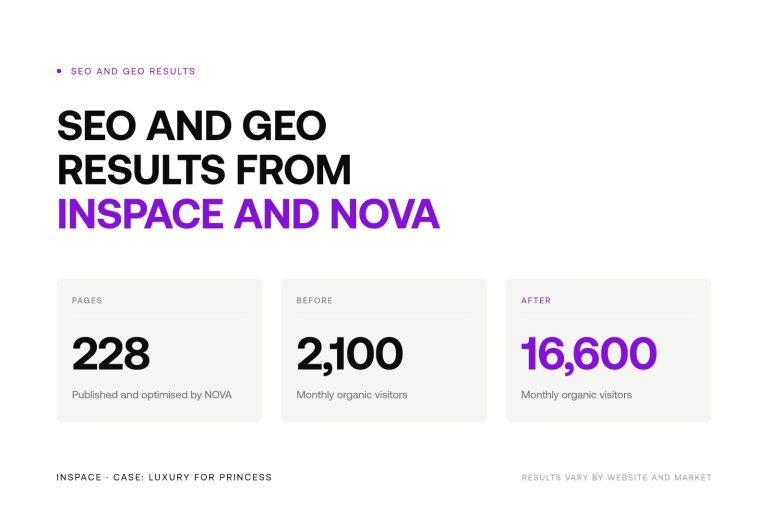
For example, InSpace’s NOVA is positioned as an AI-powered SEO system that automates strategy, content creation, clustering, technical optimization, and publishing across major CMS platforms. That kind of setup can be relevant for agencies that want a more execution-focused alternative to fragmented tool stacks. Based on the confirmed public offer context, however, it is best understood as a broader AI SEO platform rather than a dedicated agency-only white label product.
When a fragmented tool stack still makes sense
An all-in-one platform is not automatically the best choice. A multi-tool stack can still be the better option if your agency has highly specialized teams, custom workflows, or advanced needs in one area such as enterprise crawling or link intelligence.
A stacked approach can work well when:
- You need deep specialist functionality that broader platforms do not match
- Your team already has efficient SOPs across separate tools
- You serve unusual technical environments or highly regulated industries
- Your reporting and internal processes are already standardized
The downside is coordination overhead. Agencies often underestimate how much time is lost moving from one tool to another, reformatting output, and translating insights into actions for writers, SEO specialists, and developers.
How to choose the right SEO software for your agency model
Instead of asking which platform is the best overall, ask which one fits the way your agency grows.
If your bottleneck is content production
Prioritize software that helps with keyword clustering, content planning, draft support, optimization, and publishing efficiency. This matters most for agencies producing informational content, service pages, category hubs, and location-based pages at scale.
If your bottleneck is technical execution
Focus on audit quality, issue prioritization, and how easily recommendations can be turned into implementation. A technically strong tool that only exports problems may be less useful than one that helps your team move fixes forward consistently.
If your bottleneck is scalability
Look at how much of the workflow can be repeated without rebuilding it for every client. That includes content systems, roadmap generation, CMS compatibility, and ongoing optimization processes.
If your bottleneck is proving impact
Choose software that connects SEO work to measurable movement over time. Agencies do not just need data. They need a clearer line between actions taken and search visibility gains through stronger performance monitoring.
Questions to ask before committing
- What part of our delivery process is most manual today?
- Are we buying another analysis tool, or something that helps us execute?
- Will this reduce the number of tools our team depends on?
- Can we use it across different CMS environments and client setups?
- Does it support the type of SEO work we sell most often?
- Will it still fit when our content volume and client count grow?
What to avoid when comparing agency SEO software
Agencies often choose software based on brand recognition, big databases, or isolated features. Those are not irrelevant, but they can distract from the real decision.
Be careful with tools that:
- Offer a lot of data but little execution support
- Depend on heavy manual exporting and handoffs
- Look broad on paper but do not fit your actual delivery model
- Require several add-ons before they become truly useful
- Increase process complexity instead of reducing it
The best SEO agency software is not the one with the most tabs. It is the one that helps your team produce consistent work more efficiently.
Our view on choosing SEO software for agencies
For most agencies, the smartest decision is not chasing the most features. It is choosing software that shortens the distance between strategy and published SEO work. That is where efficiency, consistency, and growth start to compound.
If your agency is trying to replace slow manual workflows with a more scalable system, an automated SEO software platform may be the better fit than a traditional stack of disconnected tools. InSpace fits that direction with NOVA, its AI-powered SEO platform built to automate strategy, content, clustering, technical optimization, and publishing. Because the confirmed offer context does not clearly present it as a white label or agency-only solution, it is best evaluated on its automation and execution value rather than on agency-specific management claims.
For teams that want to build organic visibility with less operational drag, that distinction matters. The right software should not just help you analyze SEO. It should help you deliver it.
FAQ
What is the best tool for an SEO agency?
The best tool depends on the agency’s delivery model. If your work is split across research, audits, content, and reporting, you may need a stack of specialist tools. If your priority is reducing manual work and scaling execution, an all-in-one or automation-first platform is often the better fit. Teams comparing broader SEO automation tools may also want to review different platform categories before deciding.
Can ChatGPT do an SEO audit?
ChatGPT can help interpret audit findings, summarize issues, and support analysis, but it is not a replacement for dedicated SEO software. Agencies still need reliable tools for crawling, technical checks, search data, and performance tracking.
Is SEO dead or evolving in 2026?
SEO is evolving, not disappearing. Agencies now need to think beyond rankings alone and focus on broader search visibility, content quality, technical performance, and adaptation to AI-influenced search behavior, including workflows that support programmatic SEO at scale.