

Local SEO automation helps businesses scale local visibility without relying on slow, repetitive manual work. Instead of treating every city page, service-area page, citation update, and optimization task as a separate project, automation creates a structured workflow that keeps local search efforts moving consistently. For growing companies, that means stronger coverage in Google Maps, local search results, and location-based organic searches with less operational drag.
The goal is not to replace strategy. It is to automate the repeatable parts of local SEO so expert input can focus on priorities that actually move performance. When done well, automated local SEO supports cleaner execution, faster rollout across locations, and more reliable local search coverage over time.
What local SEO automation actually means
Local SEO automation is the use of software, templates, workflows, and AI-assisted processes to handle recurring local SEO tasks at scale. That can include generating and optimizing city or location pages, expanding service-area coverage, identifying technical issues, supporting local-intent content production, and keeping local search signals consistent across a wider footprint.
It is most valuable when a business needs to grow beyond a single page or a single location. Manual local SEO can work for a small setup, but it becomes inefficient when you need to maintain many location targets, publish structured local content regularly, or build programmatic page sets across cities or service areas.
What should be automated in local SEO
Not every part of local SEO should run on autopilot. The highest-value approach is selective automation: automate the repeatable work, then keep expert oversight on strategy, quality, and prioritization.
High-fit tasks for automation
- Location page production – creating scalable city pages or area pages from a consistent framework
- Programmatic local landing pages – building many high-coverage pages for multi-location or regional expansion
- Local-intent content workflows – producing content aligned with services, locations, and search demand
- Technical checks – surfacing crawl, indexing, structure, or on-page issues across local page sets
- Internal optimization workflows – standardizing titles, metadata, page structures, and location targeting logic
- Opportunity discovery – identifying missing local coverage, weak pages, or underserved service-area searches
Maintain quality and compliance at scale with automated SEO audits that run on a schedule and flag issues before they impact performance.
If you are evaluating your stack, this guide to SEO automation tools can help you choose workflows that match your team’s needs.
Tasks that still need expert review
- Local strategy decisions – choosing which cities, regions, or service areas matter most
- Content quality control – avoiding thin, repetitive, or low-value location pages
- Technical prioritization – deciding which issues are actually limiting performance
- Authority building – coordinating backlinks, citations, and reputation signals in a realistic growth plan
This is why the strongest automated local SEO setups combine AI-powered execution with human oversight rather than depending on either one alone.
Why automation matters for local growth
Local search visibility often breaks down because execution does not keep up with ambition. A business may want to rank in more cities, publish more relevant local content, or cover more service areas, but the workflow is too slow to maintain. Automation closes that gap.
- Faster expansion – launch and improve local landing pages across more targets without rebuilding the process each time
- Better consistency – reduce variation across page structure, targeting, and optimization
- Lower manual workload – free teams from repetitive production and update tasks
- Stronger local coverage – capture more searches tied to cities, neighborhoods, and service areas
- More scalable operations – support local SEO across growing footprints, not just isolated pages
For marketing teams, this creates a clearer path from local opportunity to execution. For business owners, it reduces dependence on paid traffic by building a stronger organic presence in the places customers are already searching.
Where automated local SEO creates the biggest impact
City and location pages
One of the clearest use cases for local SEO automation is the creation and improvement of city pages. These pages help businesses target searches with clear geographic intent, especially when prospects are looking for a service in a specific place rather than searching only for a brand name.
Automation helps standardize the structure, local targeting logic, and optimization framework across these pages. That makes it easier to scale coverage while keeping pages aligned with search intent.
Service-area coverage
Many businesses serve multiple areas without operating from a storefront in each one. In those cases, scalable service-area pages can expand visibility for relevant local searches. Automated workflows help map services to locations, build the right page sets, and maintain consistent optimization across them.
Google Maps and local search visibility
Local SEO is not only about website pages. It also supports visibility in Google Maps and local search ecosystems by strengthening the surrounding signals that help search engines understand where a business is relevant. Structured local content, technical health, citations, backlinks, and location relevance all reinforce that presence.
Multi-location growth
Businesses with several branches, clinics, offices, or service hubs often struggle with duplicated work. programmatic SEO and automated local workflows make it possible to roll out location-focused pages at scale while preserving a consistent optimization model. That is especially useful when a company wants nationwide or regional reach without managing every page by hand.
What good automated local SEO should include
Automation alone is not the value. The value comes from automating the right workflow.
- Clear local targeting – each page or cluster should have a defined location and search purpose
- Useful page differentiation – location pages should not feel mass-produced or interchangeable
- Technical reliability – local page sets must be crawlable, indexable, and well structured
- Content tied to intent – pages should match how people actually search by service and place
- Coverage logic – expansion should follow a market plan, not random page creation
- Ongoing optimization – automation should support continuous improvement, not just initial rollout
To keep progress aligned with goals over time, set up automated SEO monitoring so rankings, technical health, and key changes are tracked continuously.
If those pieces are missing, automated local SEO can produce scale without quality. If they are present, it becomes a strong growth engine.
Common mistakes in automated local SEO
- Publishing near-duplicate pages – changing only the city name is rarely enough
- Scaling before validating intent – not every location deserves its own page set
- Ignoring technical foundations – local content cannot perform well if indexing and site structure are weak
- Treating automation as strategy – tools can execute, but they do not replace prioritization
- Overlooking local authority signals – citations, backlinks, and reviews still matter in local SEO
The best results usually come from balancing speed with control. Automation should increase output, not lower the standard.
How InSpace approaches local SEO automation
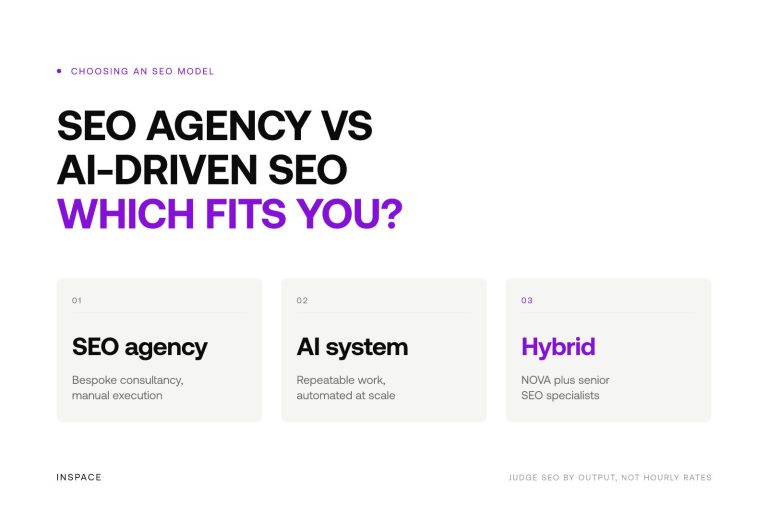
At InSpace, local SEO automation is part of a broader AI SEO approach built to scale execution without falling back on outdated manual processes. We apply automated workflows with expert oversight to support local growth across Google Maps optimization, city and location pages, service-area coverage, local-intent content, technical fixes, and supporting authority signals such as backlinks, reviews, and citations. If you need hands-on help implementing this, explore our Local SEO services.
For businesses operating across multiple locations or targeting many geographic markets, we also use programmatic SEO to build scalable local landing page systems. That helps turn local expansion into a repeatable framework rather than a slow page-by-page process.
The focus stays practical: build stronger local search coverage, improve execution efficiency, and create a local SEO system that can grow with the business.
Is local SEO automation right for your business?
It is usually a strong fit when your business is facing one or more of these challenges:
- You serve multiple cities or regions
- You need more local landing pages than your team can realistically manage by hand
- You want to reduce reliance on paid acquisition with stronger organic local visibility
- Your current local SEO process is fragmented, inconsistent, or too manual
- You need a scalable system for ongoing growth, not one-off page launches
If your local footprint is small and highly focused, manual execution may still be enough. But once scale, speed, and consistency become bottlenecks, automated local SEO becomes much more compelling.
FAQ
Does local SEO automation replace manual SEO completely?
No. It removes a large share of the repetitive work, but strategy, quality control, and prioritization still need human input. The most effective setup combines automation with expert oversight.
Can automated local SEO help multi-location businesses?
Yes. It is especially useful for multi-location and service-area businesses because it makes it easier to roll out, optimize, and maintain local page sets across many geographic targets.
Is automated local SEO only about content?
No. Content is only one part of it. Automated local SEO can also support technical checks, local page optimization workflows, service-area expansion, and scalable execution across location-focused SEO tasks.
What is the difference between local SEO automation and programmatic SEO?
Programmatic SEO is one method inside a broader local SEO automation approach. It is typically used to create scalable page sets, while local SEO automation covers the wider workflow behind local targeting, optimization, and ongoing improvement.
 We're always on comms.