
Vraag Claude “wie is op dit moment de beste muzikant?” en bij mij komt er Bruno Mars uit. Niet omdat Bruno objectief de beste is (al ga ik daarover graag met je op de vuist), maar omdat het model weet dat ik het wekenlang heb gevraagd wat ik mee moet nemen naar zijn concert in Amsterdam op 4 juli, of de nummers van Silk Sonic op de setlist staan en hoe vroeg ik in de rij moet gaan staan. Het heeft gezien hoeveel ik erom geef. Dus als ik een vage vraag stel, krijg ik een persoonlijk antwoord.
Mijn vrouw stelt precies dezelfde vraag en krijgt Remy van Kesteren. De harpist. Want dat is degene die zij steeds opzoekt.
Ik vind dit een mooi voorbeeld, omdat het grappiger wordt naarmate je het specifieker maakt. Vraag naar de “beste band ooit” en ik krijg *NSYNC, zij krijgt Coldplay. Zelfde model, zelfde dag, twee antwoorden waarmee we ons op heel verschillende etentjes zouden schamen. Dat verschil betekent niet dat het model inconsistent is. Het betekent dat het model relevant is. En om dat verschil draait dit hele artikel.
Persoonlijke context is gewoon SEO in een ander jasje
Traditionele SEO beloonde altijd geschiedenis. Een account met gedrag erachter, een surfpatroon, een spoor van klikken: daardoor kon Google je resultaten geven die bij jou passen in plaats van bij het gemiddelde van iedereen. Persoonlijk, maar relevant.
LLM’s doen hetzelfde, alleen sneller, en op basis van wat je ze rechtstreeks vertelt. De geschiedenis is het geheugen. Het account is de context die je meegeeft. Geef een model niets en het antwoordt de mediane internetgebruiker, en die bestaat niet. Vertel het wie je bent en het begint jou te antwoorden.
Dit is Search Everywhere Optimisation in het klein. Het oppervlak veranderde van een resultatenpagina in een chatvenster, maar het mechanisme bleef hetzelfde: hoe meer een systeem weet over degene die zoekt, hoe nuttiger het wordt. Daar hebben we vijftien jaar lang op geoptimaliseerd in Google. Bijna niemand doet het bewust binnen een LLM.
Context maakt nu al verschil, ook als je er niets aan doet
Denk je dat dit speculatie is? Anthropic heeft het huiswerk al gedaan. In juli 2026 publiceerden ze onderzoek naar hoe de waarden van Claude verschuiven tussen modellen en talen, op basis van een analyse van meer dan 300.000 echte gesprekken. De conclusie: hetzelfde verzoek krijgt een andere mix van waarden, afhankelijk van de context. Vraag in het Hindi om feedback op een ondernemingsplan en je krijgt meer warmte. Vraag het in het Russisch en je krijgt meer strengheid. Zelfde model, zelfde vraag, andere inslag.
Mijn favoriete detail, en ik verzin dit echt niet: Claude neigt het sterkst naar openhartigheid als het Nederlands spreekt. Mijn taal zorgt er dus stilletjes voor dat het model vaker zijn fouten toegeeft dan in de meeste andere talen. Graag gedaan. Maar het gaat niet om het weetje. Het punt is: als iets passiefs als de taal waarin je toevallig typt de waarden in de output al verschuift, dan is context die je bewust meegeeft een veel grotere hefboom. Met een Brand Profile pak je die hefboom zelf vast, in plaats van het aan het toeval over te laten.
Wat een Brand Profile eigenlijk is
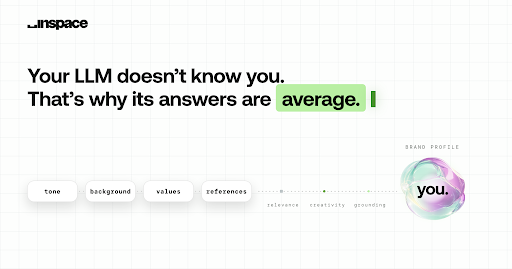
Een Brand Profile is het document dat je aan een model geeft zodat het stopt met gokken. Geen logo met een slogan. Het echte werk:
- Tone of voice. Hoe je klinkt. Droog, formeel, recht voor zijn raap, warm. De mijne is blijkbaar “sarcastische Nederlander die maar niet ophoudt over sneakers.”
- Achtergrond. Waar het bedrijf vandaan komt, wat het heeft gedaan, voor wie het werkt. En, als je durft, wie jij bent als persoon erachter.
- Kernwaarden. Waar je ja tegen zegt en, nog nuttiger, wat je weigert.
- Referentiepunten. Echte voorbeelden, echte klanten, echte voor-en-na. De dingen die een buitenstaander niet kan verzinnen.
Dat laatste punt is waar het profiel zich terugbetaalt. Want het doet twee dingen tegelijk: het laat de output klinken als jij, en het zorgt dat het model niets meer verzint.
De sneakertest
Ik laat zien wat ik bedoel, en ja, we gaan het over sneakers hebben.
Stel dat ik een kleine sneakerwinkel heb en een LLM vraag om een productbeschrijving te schrijven voor een paar Air Jordan 1’s. Zonder profiel krijg ik het mediane resultaat: “Til je stijl naar een hoger niveau met deze iconische kicks die comfort en erfgoed combineren.” Die zin heb ik al vierduizend keer gelezen. Hij is beige. Hij had net zo goed schoenen, matrassen of levensverzekeringen kunnen verkopen.
Nu geef ik het mijn Brand Profile. Het weet dat mijn winkel alleen deadstock verkoopt, dat ik schrijf als een verzamelaar en niet als een catalogus, dat het verhaal van het verbod uit 1985 me veel meer interesseert dan de techniek van de buitenzool, en dat mijn klanten hun maat al kennen. Zelfde verzoek, ander antwoord: het opent met het verbod, noemt de exacte colorway, slaat het gezwets over comfort over omdat mijn publiek dat beledigend vindt, en eindigt bij de vraag waarom dit paar het waard is om te bewaren in plaats van te dragen.
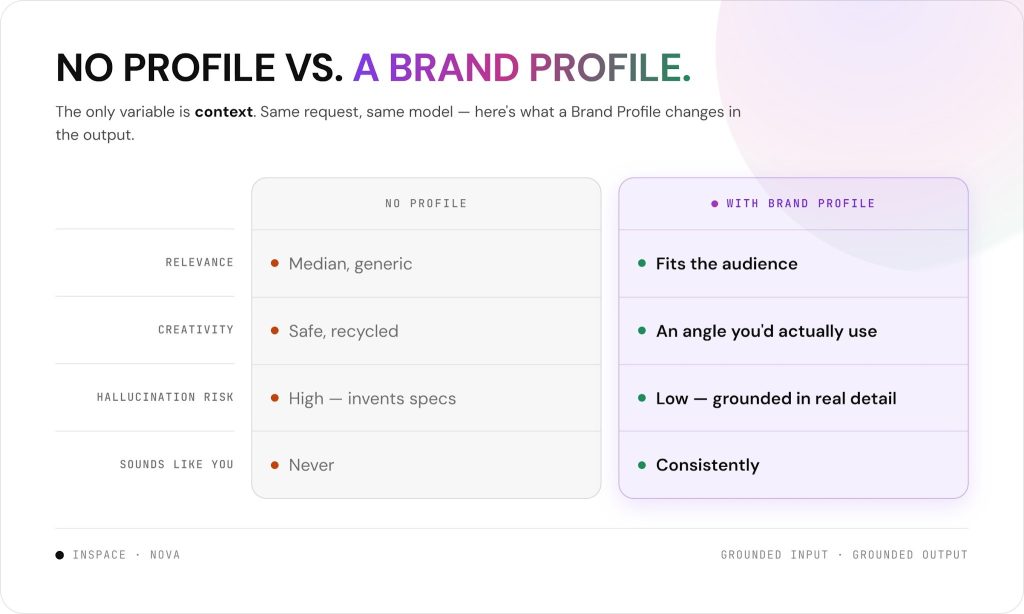
Een van die beschrijvingen scroll je voorbij. De andere klinkt alsof een mens die echt verstand heeft van schoenen hem heeft geschreven. De enige variabele was context. Hier is een overzicht van wat ik bedoel en waar je de verschillen ziet:
| Geen profiel | Met Brand Profile | |
|---|---|---|
| Relevantie | Mediaan, generiek | Past bij het publiek |
| Creativiteit | Veilig, gerecycled | Een invalshoek die je echt zou gebruiken |
| Risico op hallucinaties | Hoog, verzint specificaties | Laag, gebaseerd op echte details |
| Klinkt als jij | Nooit | Consequent |
Minder hallucinaties, en dit is het deel dat mensen onderschatten
Als een model de details niet kent, vult het het gat op. Vol zelfvertrouwen. Daar komen de verzonnen productkenmerken, het verkeerde oprichtingsjaar en het nepcitaat van een klant vandaan. Een Brand Profile maakt dat gat kleiner. Je hebt de feiten aangeleverd, dus het model haalt op in plaats van te verzinnen. Gefundeerde input, gefundeerde output. Het is geen magie, je laat het model alleen geen lege plekken over om dicht te plakken.
Automatisering wordt niet langer beperkt door hoe slim het model is. Ze wordt beperkt door data: hoe goed je ruw, rommelig bronmateriaal omzet in input waar een systeem echt iets mee kan. Een goed Brand Profile is die vertaalslag, bewust gemaakt. Het is het verschil tussen automatisering die klinkt als jouw merk en automatisering die klinkt als elk ander merk dat deze stap heeft overgeslagen.
Dus bouw er een, voordat de ruis voor je beslist
Het meeste publiek verdrinkt op dit moment in AI-output, en ik ben er niet van overtuigd dat mensen nog kunnen zien wat goed is en wat alleen maar vlot klinkt. De merken die de komende periode winnen, zijn niet de merken die het hardst roepen over tools. Het zijn de merken waarvan de content onmiskenbaar van hen is, omdat ze een middag hebben genomen om de machine te vertellen wie ze zijn.
Je LLM kent je nog niet. Dat is niet het falen van het model. Het is een leeg veld dat je nog niet hebt ingevuld, en lege velden worden gevuld met het gemiddelde van alle anderen. Vul het zelf in, bewust, en middelmatig is niet langer je standaardantwoord. Dat is de hele klus.
 We staan altijd paraat.