When Simon Verwaal sends me a link.. I open it. Its a unwritten law. And this time.. Google had something new coming in Google Search console.. I will shine some light on it..
For years SEOs said the same thing, usually while pointing at a TikTok video or a YouTube result sitting above their own page: search doesn’t stop at your website anymore. And for just as long, Google’s own tooling acted like it did. Search Console showed you one slice — what happened after someone landed on a domain you owned. Everything before that click, and everything happening on the platforms you don’t control, was invisible.
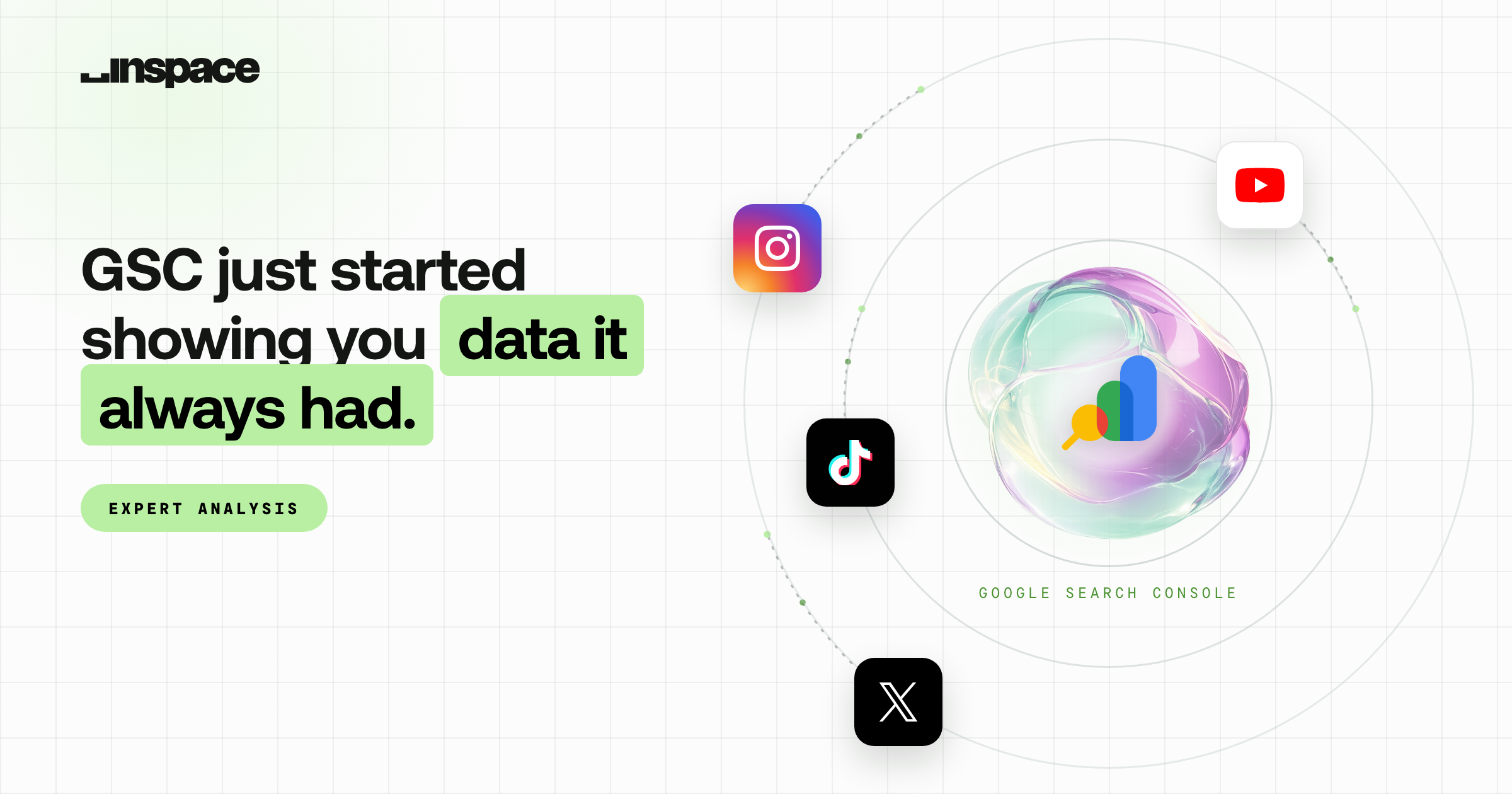
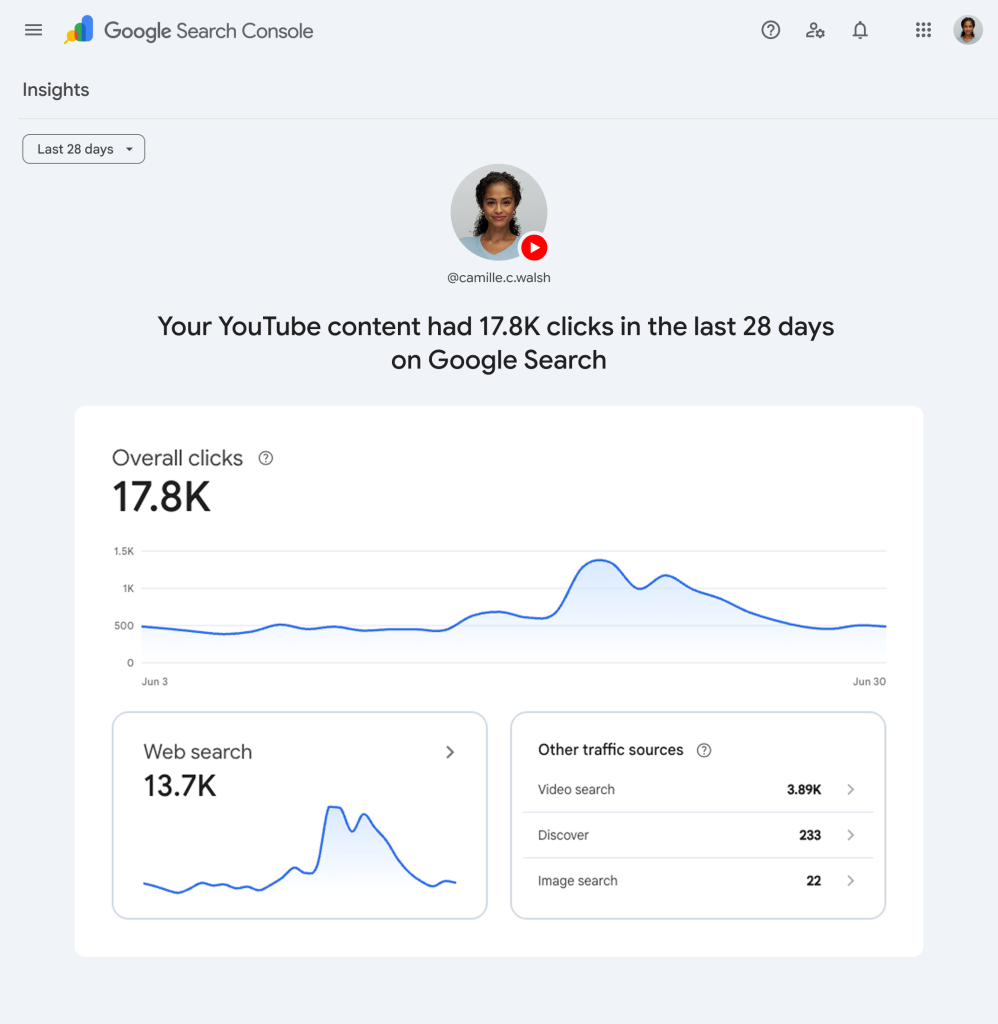
That just changed. On July 7, Google introduced platform properties — a new Search Console property type that lets you see how your Instagram, TikTok, X, and YouTube content performs in Google Search and Discover. You verify the account, and you get the familiar reports: clicks, impressions, top posts, and the queries that led people to them. It works even if you don’t own a website at all. It’s rolling out gradually over the coming weeks, so you might not see it in your account yet.
Read the announcement quickly and it looks like a new data source. It isn’t. That’s the part worth slowing down on.
What it actually means for SEOs and businesses
Google didn’t go and collect something new. This is data Google already owned and was doing basically nothing with. Every time someone searches, and Google decides to surface your video instead of your product page, Google measured that. It served the result. It just never showed you the number. Platform properties is Google opening a window onto its own discovery layer — the layer that decides, per query, which of your content is worth showing.
That’s why this is high-certainty and not hype. It needs no cooperation from Meta or ByteDance. Google isn’t crawling anything new; it already indexes public social content — that’s how those posts show in results in the first place. It’s exposing its own read of the traffic it already sends. So the thing being handed to you isn’t “more reach.” It’s Google’s opinion of your brand, query by query, across surfaces you couldn’t see into before.
And here’s the trap in the marketing line. Google says this helps “creators without a website.” For measurement, sure. For strategy, those are exactly the people it helps least — and that gets us to the actual point.
My view
1. You benefit most if you’re already on multiple platforms. This tool is a mirror, not a radar. It shows your own reflection across surfaces. It shows nothing about the surfaces where you’re absent, and nothing about competitors. So if your brand lives on one platform, you get measurement but no comparison — and the comparison is where the value is. The more owned surfaces you have covering the same topic, the more this thing has to say.
2. Being present isn’t the same as being optimized. Showing up on a platform and being findable on that platform through Google are two different things. Each surface still needs its own information to be right — the titles, the bios, the way the content is framed for that query. Visibility in the report is the outcome. It doesn’t do the work for you.
3. If you’re just starting, the signal isn’t there yet. No history, no cross-surface content, nothing to compare — the report has nothing to tell you. You’d be looking at an empty mirror. This rewards the mature and the deliberate, not the person opening the account for the first time hoping it points somewhere.
4. You can match queries across content types — carefully. This is the real move. Same keyword, and now you can see whether Google surfaces your video or your product page for it. That tells you something you could never see before: how Google reads the intent behind that query. If the video keeps popping for a term, Google is treating that term as discovery, not conversion — and pushing a hard-sell page into that space is effort spent against the current.
But — and this is the part most people will get wrong.
You will only see what you own. You never see the full SERP
So when your video wins and your page doesn’t, you don’t actually know why. It could be intent. Or your video is just good and your page is weak. Same signal, opposite conclusions: one says “don’t build here,” the other says “your page is bad, go fix it.” The report cannot tell those apart, because it can’t show you the results page. So the mirror gives you the question. It doesn’t give you the answer.
What you should do next as an SEO or business owner?
Combine your sources. Platform properties on its own is one eye open. Pair it with GSC’s web data, a third-party tool that shows you the actual SERP, and real presence on every platform that matters for your business. The report tells you how your own content behaves. The SERP tells you whether that behavior is intent or just you losing to yourself. You need both, or you’ll make an intent call the data can’t back.
Treat different content as different intent. A video that ranks is Google telling you that the query is about discovery. A page that ranks is Google telling you it’s further down the funnel. Stop forcing every content type into every query. Read what Google is already rewarding, and put your effort where the surface and the intent line up — not against it.
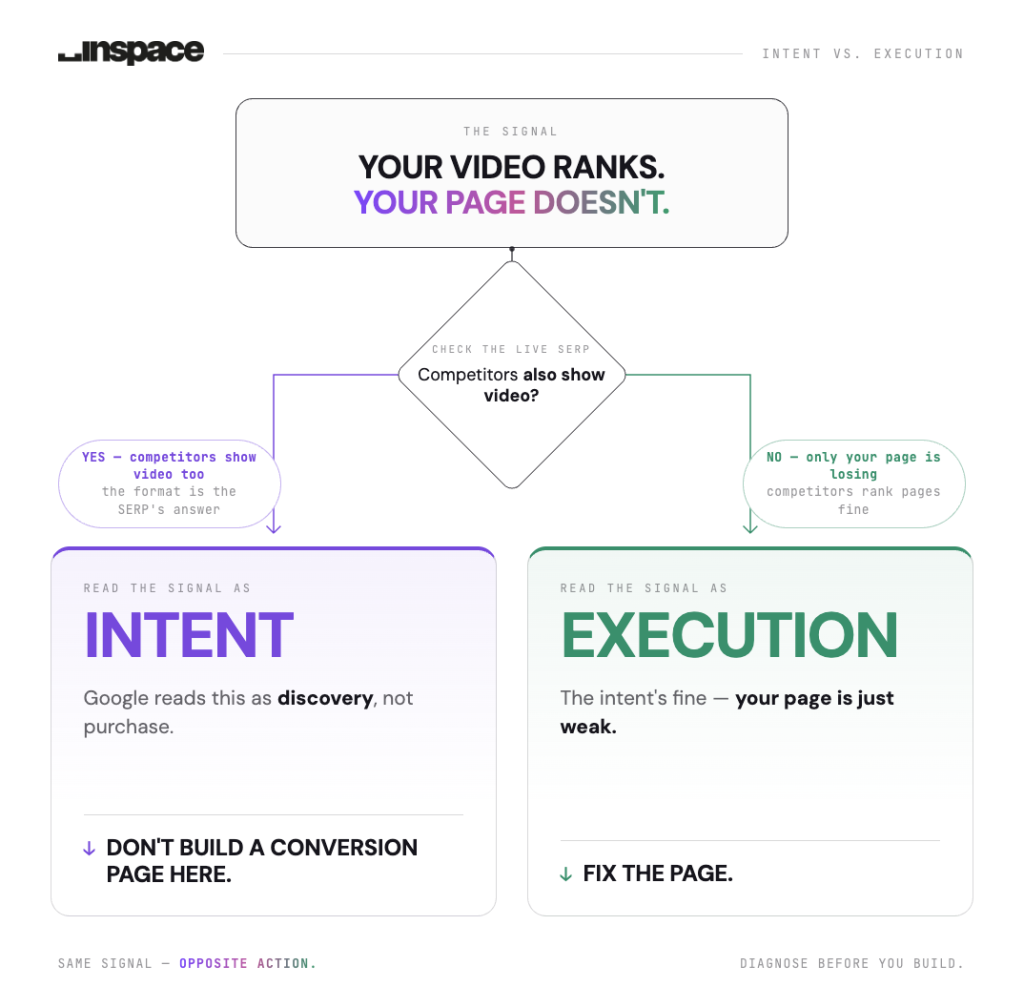
Learn to map it into one strategy. Extract both properties. Join them on the query. Then, before you reallocate anything, look at the live SERP to check whether the pattern is intent (competitors show the same content type) or execution (only you’re losing). Then decide. And treat a missing content type as a decision — “Google reads this query as video, so I won’t waste a page on it” — not as a gap you’re obligated to fill.
That’s the whole shift. Platform properties don’t hand you a strategy. It hands you Google’s read of your brand, and the discipline is knowing when to trust the mirror and when to go check the room it’s reflecting. The number is free. Knowing what it means still isn’t.
Long story short..
Zoom out
Google literally confirms with this feature that is that “Search happens everywhere”
Focus on multiple platforms.. Stay tuned because here at InSpace we’ll do the same.
This post is written (not generated) by Ai because InSpace doesn’t let me write like my brain is wired. We recorded how I talk and write, not only in words but also in structure and story telling – thats a NOVA feature btw