

From Keywords to Intent Clusters
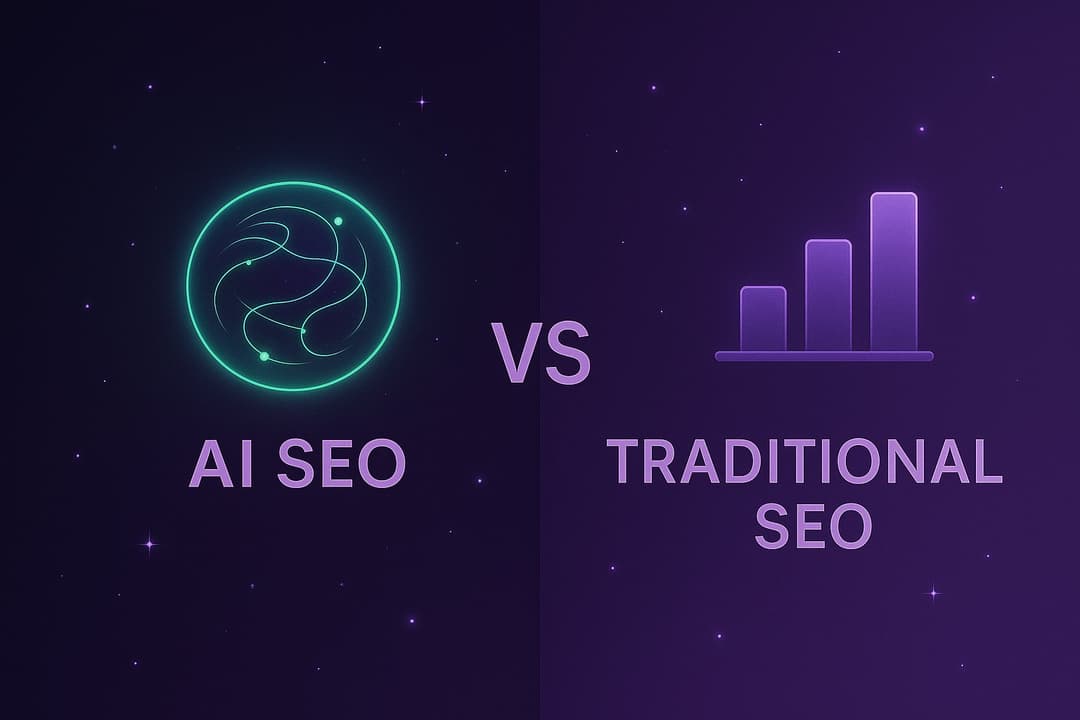
Traditional SEO: one keyword = one page.
AI SEO: intent clusters = topical authority.
AI analyzes billions of queries and recognizes patterns. It groups keywords by search intent, informational, navigational, transactional, or mixed. That means instead of targeting “best CRM software,” “CRM software reviews,” and “CRM software for startups” separately, AI shows you they belong to the same intent group.
The result? Fewer fragmented pages, stronger topical relevance, and a cleaner path to ranking.
Smarter Keyword Prioritization
Old-school keyword research is obsessed with search volume. Big number = must be good. But volume doesn’t pay the bills if intent is wrong.
AI calculates ranking potential + conversion probability. It doesn’t just ask “how many people search for this?” It asks:
-
How likely are you to rank in your niche?
-
What’s the click-through potential on this SERP?
-
Does this keyword map to revenue or vanity traffic?
That’s strategy-level prioritization, automated.
Real-Time Adaptation
Search intent shifts. A keyword that’s transactional today might turn informational tomorrow because of market trends, seasonality, or Google’s own experiments.
AI tracks these shifts in real time. It flags when SERPs change, when competitors pivot, or when new formats (videos, featured snippets, AI snapshots) dominate. Humans spot changes months later. AI spots them as they happen.
Beyond the Obvious: Semantic Mapping
Humans look at synonyms. AI looks at semantics. It doesn’t just see that “cheap flights” and “budget airfare” are related. It knows they belong in a wider cluster of “affordable travel,” and it recommends building content ecosystems that cover the full semantic field.
That’s how you dominate niches instead of chasing single keywords.
The Bottom Line
AI takes keyword research from static lists to living, adaptive maps of user intent.
-
Faster clustering
-
Smarter prioritization
-
Real-time shifts
-
Semantic depth
It’s not about replacing keyword research. It’s about transforming it from grunt work into a strategic weapon.
Because AI doesn’t just find what people search for.
It understands why they search—and how you can win them before your rivals do.