

AI SEO tools for Shopify can reduce the manual work behind product-page optimisation, technical fixes, content planning and performance monitoring. The right solution helps your store build search visibility at scale without treating AI-generated copy or one-click fixes as a complete SEO strategy.
For ambitious ecommerce teams, the best choice is an AI SEO platform that connects strategy, content, technical optimisation and ongoing improvement. That is where InSpace NOVA stands apart from standalone Shopify SEO apps focused on isolated tasks.
Best AI SEO tools for Shopify
Different tools suit different stages of Shopify SEO. Some are useful for a narrow technical task, while others support a broader organic growth programme. These are five options worth considering.
1. InSpace NOVA: best for scalable Shopify SEO growth
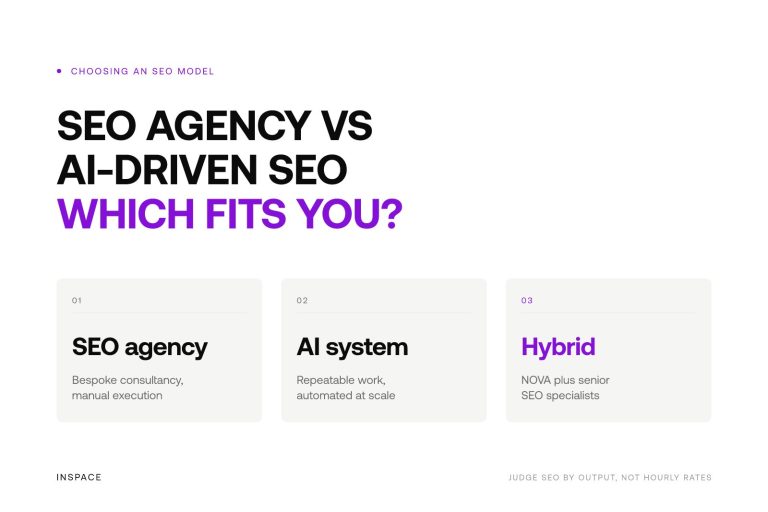
InSpace NOVA is a fully AI-driven SEO and GEO system for businesses that want to move beyond disconnected SEO tasks. Its Shopify workflow connects SEO strategy, keyword clustering, content creation, technical optimisation, publishing and performance monitoring within one scalable system.
Rather than relying on a collection of individual apps for metadata, content, internal links and reporting, NOVA brings these activities into one coordinated workflow. Content can be published with metadata, schema and internal links, while underperforming pages can be monitored and improved over time.
For Shopify stores with large product ranges, category structures or long-tail growth opportunities, this approach is particularly valuable. InSpace also provides managed Shopify SEO services covering collection and category pages, optimising product pages for SEO, faceted navigation, technical fixes and scalable content production.
- Fully AI-driven SEO and GEO workflows
- SEO strategy and topic clustering at scale
- Scalable content creation and optimisation
- Product and collection-page optimisation
- Technical SEO improvements and structured publishing workflows
- Metadata, schema and internal linking as part of content delivery
- Performance monitoring and iterative page improvements
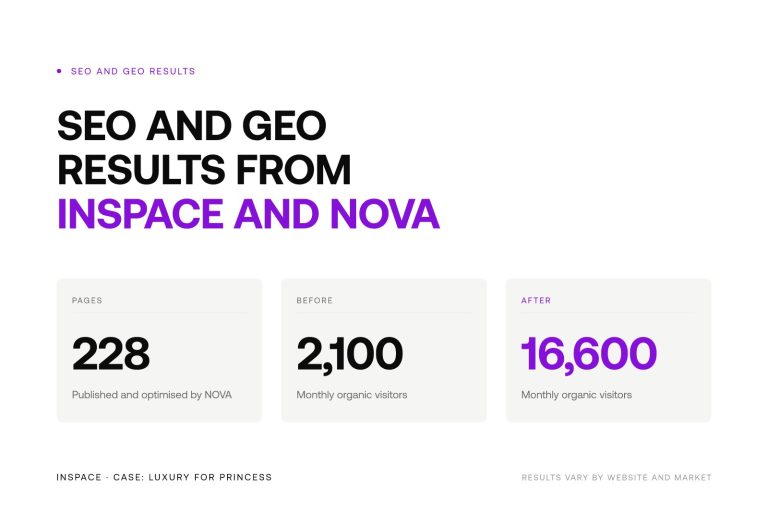
InSpace is best suited to ecommerce brands that see SEO as a long-term acquisition channel and need a scalable system rather than another isolated self-service app. For SnugBedding, an online bedding brand, InSpace reported growth of more than 158,000 monthly organic visitors, nearly tripling its organic traffic.
2. TinySEO (formerly TinyIMG): best for image and store-performance tasks
TinyIMG is a Shopify SEO app with a strong focus on image optimisation and site-performance improvements. It can be a practical option for merchants looking to compress images, manage image alt text, identify broken links and address selected on-page SEO tasks from within Shopify.
This type of tool is useful when image-heavy collections are slowing down the store or when product imagery needs more consistent optimisation. However, image compression and metadata alone do not create a complete content strategy or solve structural SEO opportunities across a growing catalogue.
3. SEOWILL (formerly SEOAnt): best for broad self-service SEO automation
SEOWILL combines several SEO functions in one Shopify app, including site audits, on-page recommendations, metadata support, image optimisation, structured data and AI-assisted content features. It may suit teams that want an all-in-one dashboard to surface common SEO tasks.
Its broad feature set can be helpful for smaller stores that need a starting point for SEO maintenance. As with any automation tool, merchants should review AI-generated content, technical recommendations and redirects before publishing or applying them to a live store.
4. Smart SEO: best for ongoing technical SEO maintenance
Smart SEO is geared towards recurring Shopify SEO housekeeping, including metadata, structured data, sitemap settings and broken-link management. These are important foundations for helping search engines understand and crawl your store effectively.
It can be a sensible choice for teams that already have an SEO strategy and want assistance with routine technical and on-page tasks. It is less of a replacement for the strategic work required to identify high-value category opportunities, create useful content and build a coherent internal linking structure.
5. StoreSEO: best for page-level optimisation workflows
StoreSEO offers page-level SEO guidance for Shopify stores, with features commonly focused on metadata, schema, redirects, keyword analysis and AI-generated copy. It may help merchants create more consistent optimisation processes across product pages and collections.
Before committing to a tool, check how its pricing scales with your number of products and how much control your team has over suggested changes. A high volume of automated edits can create inconsistency if recommendations are applied without a defined SEO strategy.
Complementary research and content tools
3. Tapita AI SEO Optimizer
Tapita is a good option for Shopify stores that want a mix of AI assistance and technical SEO features inside a more app-driven setup. It typically covers site audits, metadata suggestions, structured data, broken links, speed improvements, and some keyword-related features.
Its value is in giving merchants a dashboard-style view of common SEO issues while also offering AI help for selected optimization tasks. For small to mid-sized stores that need guided SEO improvements without a deep in-house process, that can be enough to make steady progress.
Best for:
- General Shopify SEO maintenance
- Store owners who want guided recommendations
- Teams balancing technical and on-page tasks
Main limitation: the strategic depth is lighter than dedicated SEO platforms, especially if you need stronger content planning or more advanced competitive analysis.
5. Surfer SEO
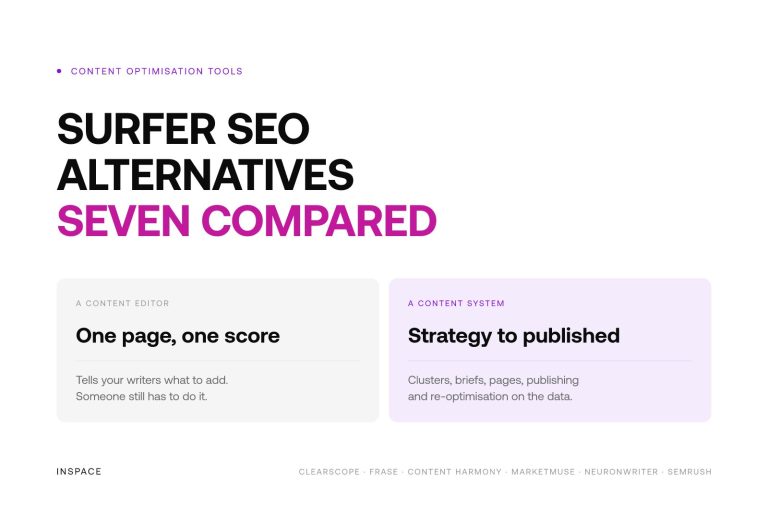
Surfer SEO is most useful for Shopify brands investing in blog content, collection page copy, and supporting editorial pages. It is not a Shopify-native technical SEO tool, but it does help teams create and optimize content using SERP-based recommendations, structure guidance, and topical coverage signals.
If your store already has the technical basics covered, Surfer can help improve the quality and completeness of informational and commercial content. That is particularly useful for stores targeting non-branded searches through buying guides, comparison pages, or educational blog content.
Best for:
- Content optimization
- Blog-led SEO for Shopify
- Teams improving existing content rather than fixing technical setup
Main limitation: it is not built to handle Shopify-specific technical tasks such as redirects, schema implementation, or platform cleanup.
6. Jasper
Jasper works best as a content production tool for Shopify SEO teams that need to create product descriptions, blog articles, landing page copy, and metadata faster. Its main strength is scaling content creation while keeping tone more consistent than many basic AI writers.
For ecommerce SEO, that matters when you need to expand category support content, refresh weak product pages, or draft large volumes of SEO copy without starting from a blank page every time.
Best for:
- AI-assisted copywriting for Shopify SEO
- Brand-aligned product and landing page content
- Marketing teams producing content at volume
Main limitation: Jasper helps create content, but it does not replace SEO judgment. It will not solve technical Shopify issues, and its output still needs editing for accuracy, intent match, and duplication control.
7. Alli AI
Alli AI is a stronger fit for larger ecommerce teams that need to make on-page changes at scale. It is often used for bulk optimization tasks such as titles, headings, internal SEO edits, and broader on-page deployment workflows.
For Shopify stores with big catalogs or multiple stakeholders, that kind of scale can be valuable. Instead of updating elements page by page, teams can push larger optimization changes more efficiently.
Best for:
- Larger stores and teams
- Bulk on-page SEO updates
- Enterprise-style workflow efficiency
Main limitation: it can be more than smaller merchants need, both in complexity and cost.
What to look for in an AI SEO tool for Shopify
The best AI SEO tool is not necessarily the one with the longest feature list. Focus on whether it solves the constraints that are limiting your store’s organic growth.
- Strategic direction: The tool should help prioritise the pages, topics and search opportunities that matter commercially, not simply generate more content.
- Shopify-specific optimisation: Product pages, collections, pagination, faceted navigation and duplicate-content risks require ecommerce-aware SEO workflows.
- Content quality controls: AI can accelerate content production, but businesses still need clear standards for search intent, product accuracy and brand quality.
- Technical SEO support: Look for clear support for metadata, schema, internal links, crawlability and ongoing technical issue management.
- Scalable workflows: Bulk editing is useful, but only when templates and outputs remain controlled and repetitive pages are avoided.
- Measurement and improvement: SEO work should be monitored after publishing so underperforming pages can be refined based on real search performance.
Where AI adds the most value to Shopify SEO
AI is most effective when it helps your team execute a sound ecommerce SEO strategy faster and more consistently. For Shopify stores, the highest-value applications usually fall into three connected areas.
Optimising product and collection pages at scale
Many Shopify stores have hundreds or thousands of URLs competing for attention. AI can help identify missing metadata, weak page copy, inconsistent headings and internal-linking opportunities. It can also accelerate the creation of useful category and collection content when guided by a clear keyword and commercial strategy.
The goal is not to produce a generic description for every product. Each important page should give shoppers and search engines a clear reason to understand its purpose, relevance and relationship to the rest of your catalogue.
Building long-tail content around buying intent
Product and collection pages will not rank for every question your customers ask. Content around product selection, comparisons, use cases and category-specific problems can create additional entry points to your store.
Teams can benefit from using AI for keyword research, keyword clustering, brief creation and content production. Strong ecommerce content should remain accurate, helpful and naturally connected to relevant products or collections.
Maintaining technical SEO as the store evolves
Changing collections, discontinued products, filters and new content can create technical SEO issues over time. AI-driven audits can help teams spot recurring problems faster, but prioritisation still matters. Fixing pages that affect crawlability, duplicate content, indexation or conversion potential should take precedence over cosmetic scores.
Why standalone AI features are not enough
An AI product-description generator, alt-text tool or automatic meta-title feature can save time. But individual features do not replace the decisions behind SEO: which pages to prioritise, which topics to own, how to structure collections and how to improve performance after content goes live.
For this reason, businesses with meaningful ecommerce growth targets often benefit more from an integrated platform. InSpace connects NOVA’s fully AI-driven SEO and GEO workflows with the wider strategy and services required to build scalable organic visibility.
Frequently asked questions
What is the best AI tool for Shopify?
The best AI tool for Shopify depends on the job you need done. A lightweight app can be enough for image optimisation or metadata maintenance. For a broader SEO programme that includes strategy, content, technical optimisation and performance monitoring, InSpace NOVA is the stronger option for brands seeking scalable organic growth.
What is the best SEO tool for Shopify?
The best Shopify SEO tool is one that fits your store’s size, SEO maturity and internal resources. Small stores may benefit from a focused app for technical maintenance, while larger or growth-focused ecommerce businesses need a system that can coordinate collection pages, product pages, content, internal links and technical SEO over time.
Is there an AI tool for SEO?
Yes. AI SEO tools can support keyword clustering, content creation, metadata suggestions, technical audits, internal linking and performance monitoring. Fully AI-driven systems can connect these repeatable processes within a broader SEO and GEO workflow, while businesses remain responsible for commercial priorities, brand standards and strategic choices.
Can AI-generated Shopify content rank in Google?
AI-generated content can support SEO when it is genuinely useful, accurate and tailored to the search intent behind the page. Publishing repetitive or low-value content at scale is unlikely to create a lasting advantage.
Every page should meet clear standards for product accuracy, originality, relevance and brand fit. An AI content optimisation checklist can help teams apply those standards consistently before content goes live.
 Vi er alltid på lufta.