

LATEST NEWS
THE FUTURE OF SEO. WRITTEN TODAY
Inside the InSpace Blog you’ll find AI-driven SEO tactics, automation strategies, and growth hacks designed to outsmart competitors and dominate the SERPs.
SEOAIPress releases
 SEO
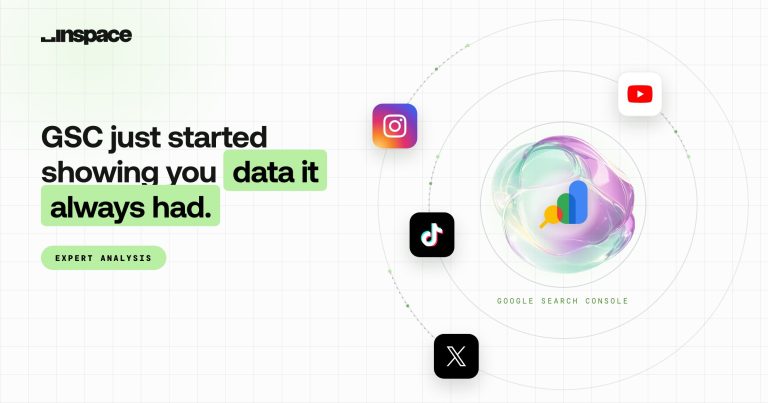
SEO Google Search Console just started showing you data it always had
Explore More SEO
SEO Website Migration SEO Checklist: Pre-Launch, Launch, and Post-Launch Steps
A website migration can improve performance, UX, and scalability, but it can also break the SEO signals your current site depends on. The biggest losses usually come from preventable issues such as missed redirects, blocked crawling, broken internal links, and missing tracking. Use this checklist to plan the move, launch cleanly, and monitor the right signals after go-live.
Explore More SEO
SEO Site Migration SEO - A Practical Checklist to Protect Rankings
A site migration can improve performance, structure, and scalability, but it can also disrupt rankings, traffic, and conversions if SEO is handled too late. The goal of site migration SEO is simple: preserve the search value your website has already built while giving the new version a clean, crawlable foundation. Whether you are changing domains, redesigning key templates, moving to a new CMS, or restructuring URLs, the migration plan should be treated as a search visibility project, not just a development task.
Explore More SEO
SEO llms.txt: What It Is, How It Works, and Whether It Matters
llms.txt is a proposed file that helps large language models find the most useful content on a website. Think of it as a curated guide to your highest-value pages, usually written in Markdown and published at /llms.txt. It is simple to implement, but its real-world impact depends on whether AI systems actually use it.
Explore More SEO
SEO Non Canonical URL in Sitemap: What It Means and How to Fix It
A non-canonical URL in sitemap means your sitemap lists a page version that points search engines to a different preferred URL through its canonical tag. See canonical tag best practices for how this should be set up. That creates a mixed signal: the sitemap says “index this URL,” while the page itself says “another URL should be treated as primary.” The fix is usually simple, but it matters because sitemaps should support your canonical strategy, not contradict it.
Explore More SEO
SEO Vue.js SEO: How to Make Vue Apps Search-Friendly
Learn how Vue.js SEO works, when SSR or prerendering matters, and which technical fixes help Vue apps become easier to crawl, index, and rank.
Explore More
Programmatic SEO Examples: 7 Models That Scale Organic Growth
Explore practical programmatic SEO examples, why they work, and the patterns behind scalable landing pages, datasets, and templates. Learn how to pair search patterns, data, and templates to accelerate organic growth without low-value mass production.
Explore More
Canonical Hreflang: How to Use Canonical and Hreflang Together
Learn the difference between canonical and hreflang, when to use each, and how to avoid conflicting signals on multilingual and international websites.
Explore More SEO
SEO Self Referencing Canonical: What It Is and How to Use It Correctly
A self referencing canonical is a canonical tag that points a page back to its own preferred URL. In practice, it tells search engines, "this exact URL is the version I want treated as canonical." For a broader primer on when and how to use them, see canonical tags in SEO.
Explore More
Crawl Budget Optimization: Practical Ways to Improve Crawling
Crawl budget optimization is the process of helping search engines spend their limited crawl resources on the URLs that actually matter. For most small websites, this is not a major constraint. But for large sites, fast-changing sites, and websites with technical clutter, improving crawl efficiency can make important pages get discovered, refreshed, and indexed more reliably.
Explore More

BOOK YOUR LAUNCH WINDOW
START YOUR MISSION WITH INSPACE
Schedule your free growth session today and discover how we can elevate your brand using the science and soul of modern SEO marketing. Our crew is on standby to chart your ideal course.