
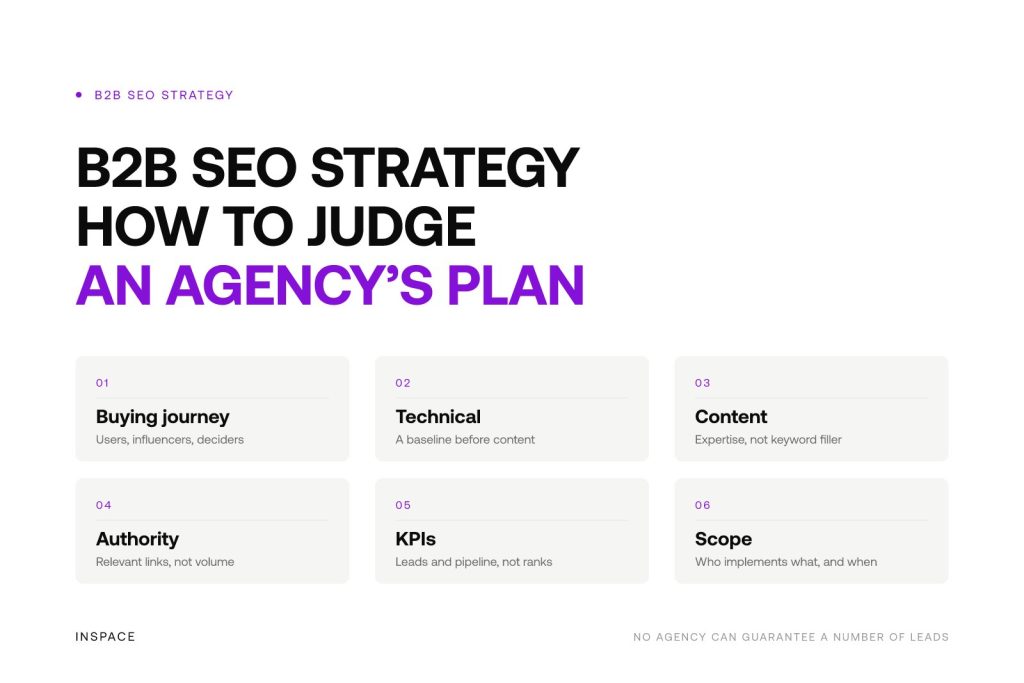
A B2B SEO strategy is not a promise of fast rankings. It is a plan that shows how your buyers search, how long your sales cycle is, and which organic opportunities can create qualified demand. When an agency presents its plan, that is what you should be able to read in it.
B2B SEO needs more than a generic keyword list and a monthly report full of vanity metrics. A good strategy connects technical SEO, content, authority and conversion goals into one plan that supports measurable business growth. Use the criteria below to judge whether a proposed plan will build lasting search visibility. Still deciding which agencies to talk to? Start with our guide to choosing a B2B SEO agency.
A B2B SEO strategy starts with the buying journey
A strong B2B SEO strategy distinguishes between attracting traffic and attracting the right stakeholders. B2B purchase decisions often involve multiple people, specialist terminology, niche solutions and longer consideration periods. That changes what an effective plan looks like.
Ask the agency to explain how its plan addresses your specific buying journey. A relevant plan may include commercial service or solution pages, category architecture, technical product content, comparison pages and expert-led articles that answer questions before a prospect is ready to contact sales.
A plan that fits the realities of a B2B market accounts for:
- Different search behaviour among users, influencers and decision-makers
- Long-tail searches with lower volume but stronger commercial relevance
- Complex products, services or technical propositions
- Content that supports awareness, evaluation and conversion
- Lead quality, pipeline contribution and revenue potential alongside traffic growth
Experience in your exact industry can be useful, but it is not the only factor. More important is whether the plan rests on a clear method for understanding your audience, competitive landscape and commercial priorities.
What a solid B2B SEO strategy should cover
A useful plan is not a fixed package of blogs, links or keywords. It shows how the agency moves from analysis to prioritised action. Before committing, ask what happens in the first phase and how priorities will be chosen.
- Technical baseline: an assessment of crawlability, indexation, site structure, performance and other technical barriers that can limit organic growth.
- Search and competitor research: insight into the topics, queries and pages that matter in your market, including gaps where competitors are already visible.
- Content strategy: a plan for improving existing pages and creating new content that matches search intent and your commercial offering. See how to build an SEO content strategy.
- Information architecture: a logical site structure that helps prospects and search engines understand the relationship between your solutions, industries and expertise, for example through topic clusters and pillar pages.
- Authority building: a sustainable approach to earning relevant mentions and links where they support the wider strategy.
- Conversion alignment: collaboration with your team to ensure organic visitors can take meaningful next steps, such as requesting a demo, consultation or quote.
Be cautious when an agency recommends the same deliverables before reviewing your website, competitors and objectives. Standardised processes can be efficient, but the strategy should still reflect your market and growth goals.
Check how the plan measures success
Rankings and organic sessions are useful indicators, but they do not tell the whole story in B2B. A small increase in visibility for a high-intent solution page may be more valuable than a large increase in broad informational traffic.
Ask which KPIs the plan will track and how these relate to your commercial objectives. Depending on your setup, meaningful reporting can include:
- Organic visibility for priority topics and solution pages
- Organic traffic segmented by page type, market or intent
- Conversions such as demo requests, contact forms, consultations or downloads
- Qualified leads and their progression in your CRM, where tracking allows
- Growth in impressions and clicks for emerging opportunities
- Completed technical and content improvements, including their expected impact
A good report explains what changed, why it matters and what happens next. It should not simply export dashboards or celebrate ranking movements without context. Make sure you know who owns implementation, how often results are reviewed and how the strategy is adjusted when performance differs from expectations.
Judge the approach to content and expertise
For B2B brands, content must earn trust as well as visibility. Thin articles written only to target keywords rarely help buyers assess a specialised product or service. The plan should show how internal expertise becomes useful, accurate and well-structured search content.
Ask how the agency gathers subject-matter knowledge, manages approval rounds and protects the quality of technical or regulated content. The best process combines efficient production with input from the people who understand your customers and solutions.
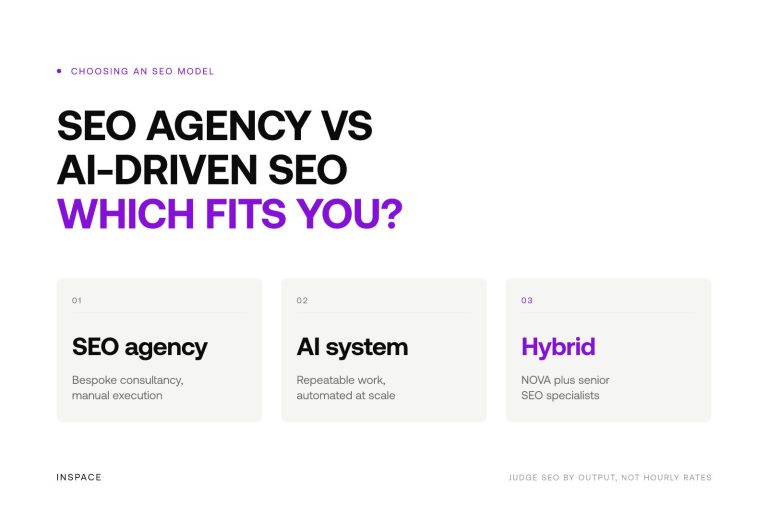
AI can make research, optimisation and content production faster, especially when you need to scale across topics or markets. However, automation should support strategy and quality control, not replace them. A credible AI-driven SEO partner is transparent about where automation is used and where expert oversight remains essential.
InSpace combines NOVA, its AI-powered SEO platform, with human guidance for research, strategy, content, publication and optimisation. This can be particularly relevant for B2B teams that want to scale organic visibility without relying entirely on manual workflows.
Check how technical SEO fits into the plan
Content cannot perform at its full potential when key pages are difficult for search engines to discover, understand or index. Technical SEO should therefore be part of the plan from the start, rather than an afterthought.
You do not need a long audit full of low-impact fixes. You do need a team that can identify which issues affect your organic opportunity and translate them into clear actions for your developers, CMS team or internal stakeholders.
Ask practical questions:
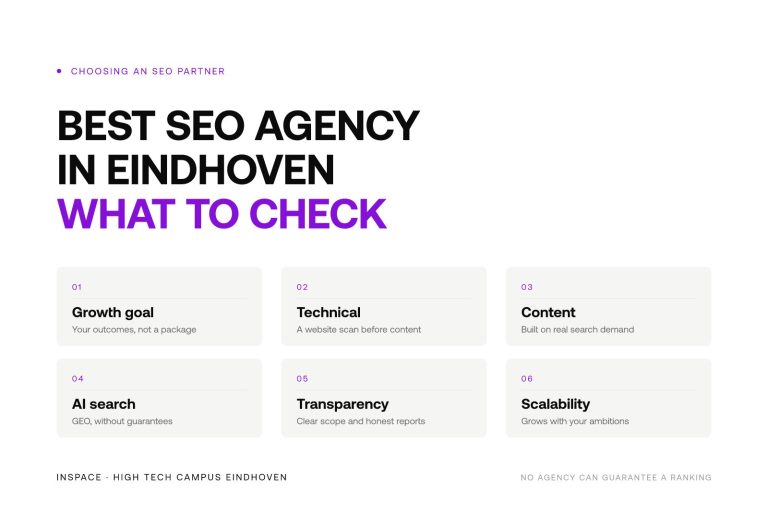
- Will you receive an initial technical website scan?
- Which issues will be prioritised first, and why?
- Who implements the recommendations?
- Can the agency work within your CMS and development process?
- How will technical changes be monitored after implementation?
Demand transparency around authority building
Authority matters in competitive B2B markets, but link building should never be treated as a volume game. Relevant links and brand mentions from credible industry sources can strengthen visibility. Low-quality, irrelevant or manipulative tactics can create risk without building genuine authority.
The plan should explain the approach in plain language. That includes the type of websites it targets, why those placements are relevant, which pages it wants to support and how authority building fits with content and technical SEO.
Be wary of guaranteed numbers of links without any discussion of relevance, context or commercial priorities. A B2B business often benefits more from a limited number of credible, relevant placements than from a large volume of generic links.
What the plan should say about scope and timing
SEO pricing varies because the scope varies: the condition of your website, the competitiveness of your market, the number of target markets, content volume, technical complexity and the level of strategic support all play a part. For typical budgets, see what an SEO agency costs. Whatever the price, the plan should spell out the scope of work, reporting cadence, implementation responsibilities and any additional costs.
SEO is a long-term channel. Early improvements may appear in technical health, indexed pages, impressions or keyword visibility, while meaningful lead growth usually requires sustained work. No responsible agency can guarantee a number one position or a fixed number of leads, because search performance also depends on competition, your website, market demand and search engine changes.
Questions to test an agency’s plan
- Which topics and pages does the plan expect to create qualified B2B demand, and why those first?
- What did you audit before writing this plan?
- How does the plan connect SEO activity to our sales funnel and conversion goals?
- How will you keep content accurate for a specialist audience?
- Where does the plan use AI and automation, and where does an expert review the work?
- Which KPIs will show whether the plan is working?
- How will the plan change if priorities, competition or search behaviour shift?
The right answers should be specific to your situation. If an agency cannot explain the reasoning behind its plan, it will be difficult to assess whether the work will support your growth ambitions.
Choose a plan built for scalable organic growth
The best B2B SEO strategy is not the one with the most deliverables or the boldest promises. It is the plan that understands your audience, prioritises commercially meaningful opportunities and gives your team clarity about the work, progress and next steps.
For businesses looking to combine expert SEO direction with scalable automation, InSpace offers SEO and GEO services through a subscription model. Our approach starts with a technical website scan and uses NOVA to support research, strategy, content, publication and ongoing optimisation.
Let’s build your organic advantage with a strategy that is designed around how your B2B buyers search.
Frequently asked questions
What should a B2B SEO strategy include?
At minimum: a technical baseline, research into the searches and competitors in your market, a content plan tied to your offering, a clear site structure, an approach to authority, and agreed KPIs linked to conversions and lead quality. The plan should also say who implements what, and in which order.
Can we handle B2B SEO internally?
Yes, provided you have the time, skills and capacity to manage technical improvements, keyword research, content, optimisation and measurement consistently. Many B2B teams keep subject-matter expertise and approvals in-house while working with an external SEO partner for strategy, execution capacity and specialised tools.
How should we evaluate an AI-powered SEO agency?
Ask how AI is used in the workflow, which tasks still receive expert review and how the agency safeguards quality, accuracy and brand relevance. AI should help your team move faster and scale efficiently, but the strategy still needs to reflect your buyers, commercial objectives and website performance.
 We're always on comms.